5G Technology and Innovation: Implications for the Development of Real-Time Applications and Services
Understanding 5G Technology
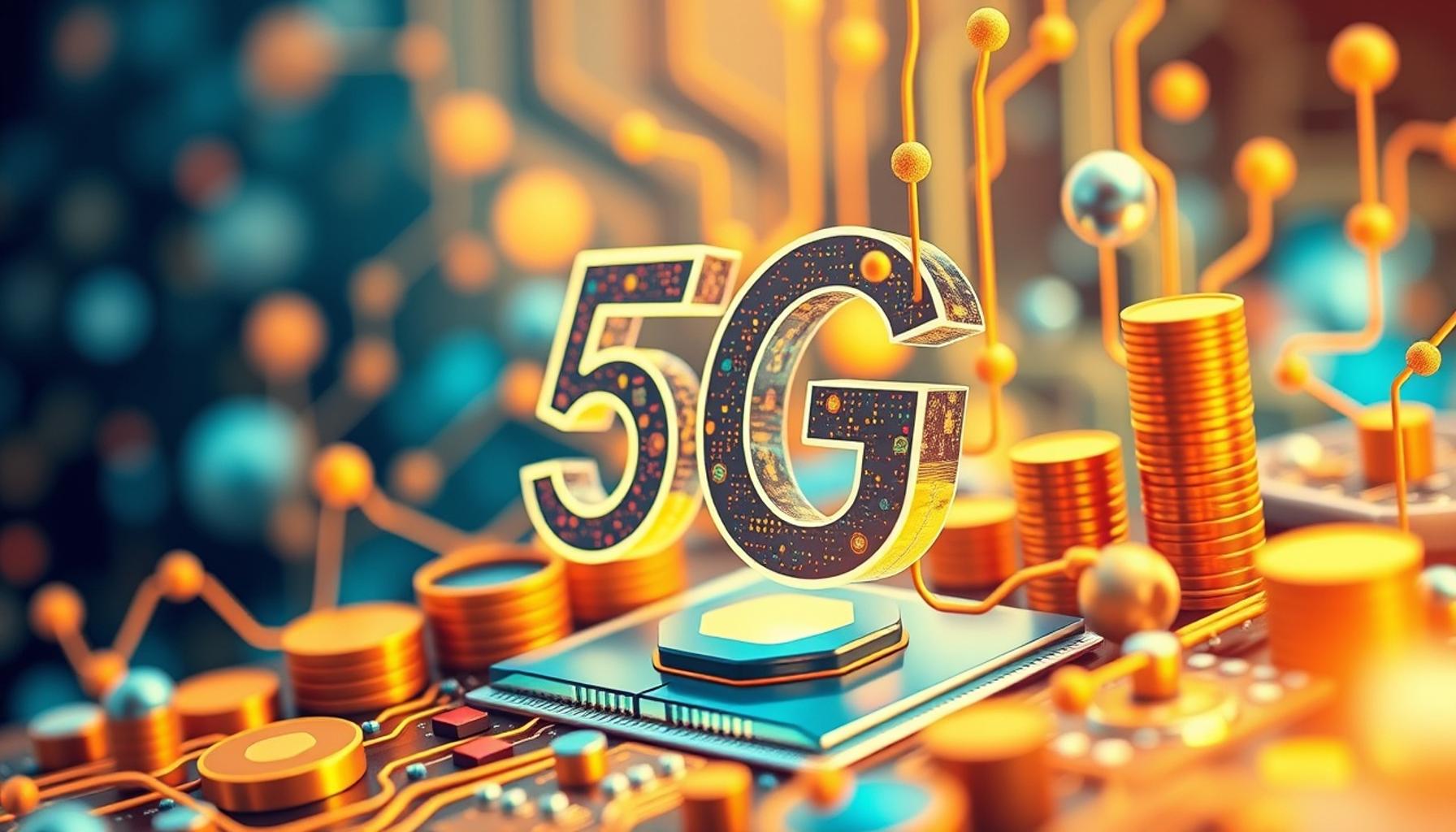
The shift to 5G technology is more than just a technical upgrade; it represents a fundamental transformation in the telecommunications landscape. With its promise of enhanced performance, this technology serves as a backbone for the digital economy, enabling businesses and individuals to connect, communicate, and innovate in ways that were previously restricted by bandwidth limitations and latency issues.
One of the most astonishing features of 5G is its ultra-fast speed, which can reach up to 10 Gbps. To put this into perspective, this means you can download a full-length HD movie in just a few seconds. Such speed is not merely a convenience; it significantly enhances streaming quality for users and increases productivity for professionals relying on cloud-based applications.
In addition to speed, 5G offers low latency. With response times reduced to mere milliseconds, even the most latency-sensitive applications, such as online gaming and financial trading platforms, can operate without the hiccups often experienced with older technologies. For instance, stock traders can execute orders in real-time, leading to more accurate trades and better financial outcomes.
Moreover, 5G’s capability for massive connectivity allows it to support millions of devices within the same area, which is pivotal as the Internet of Things (IoT) continues to grow. Imagine a city where traffic lights, public transportation, and even the power grid communicate seamlessly to optimize efficiency and reduce congestion. Such applications are already being explored in smart cities across the United States, where cities like San Francisco and Chicago are integrating IoT with 5G to manage urban infrastructure more effectively.
Transformative Applications of 5G
The implications of 5G technology reach wide-ranging sectors, revolutionizing how services are delivered. In the field of healthcare, for example, telemedicine is immensely amplified. Doctors can perform remote surgeries using robotic instruments with real-time video feedback, a concept that seemed futuristic but is now becoming a reality. Patients can receive instant medical consultations from specialists no matter where they are located, drastically improving healthcare access and quality.
In the realm of entertainment, 5G opens up new avenues for immersive experiences. Augmented reality (AR) and virtual reality (VR) applications can now deliver smoother and more interactive environments. This advancement could redefine gaming in the United States, where players can engage in AR experiences that blend digital elements with the real world, enhancing everything from gaming to real estate viewings.
As we move forward, it is essential to recognize that the advancements brought about by 5G technology will not only change our gadgets but will also transform entire industries. Its influence on daily life and across various sectors is a testament to how far telecommunications have come and how integral connectivity will be in shaping our collective future.
DIVE DEEPER: Click here for exciting tips on snagging free clothing from Shein!
Innovative Solutions Driven by 5G
As we delve deeper into the capabilities of 5G technology, it becomes evident that its implications extend far beyond mere connectivity. The advantages offered by 5G facilitate a wide array of real-time applications and services that are set to transform businesses and daily life.
One area that stands to gain immensely from 5G technology is the automotive industry. With the advent of connected and autonomous vehicles, the demand for real-time data exchange has skyrocketed. 5G allows vehicles to communicate with each other and with infrastructure, ensuring that traffic patterns and road conditions are updated instantaneously. This connectivity can significantly enhance safety measures, reduce accidents, and improve traffic flow. Imagine a scenario where your car receives data about a traffic jam miles ahead, allowing it to reroute before you even encounter the congestion.
Moreover, the retail sector is also experiencing a renaissance fueled by 5G capabilities. Businesses can implement real-time inventory tracking and automate supply chain logistics with precision. Retailers can offer personalized shopping experiences through smart applications that analyze customer behavior, suggest products, and even provide augmented reality fitting rooms. By leveraging the speed and low latency of 5G, shopping becomes more interactive and customer-centric.
Key Real-Time Applications Revolutionized by 5G
As we explore the real-time applications facilitated by 5G, it’s useful to highlight specific sectors where innovation thrives:
- Healthcare: Remote monitoring devices can continuously track patients’ health in real time, alerting professionals instantly if any irregularities arise.
- Manufacturing: Smart factories can operate advanced robotics that communicate seamlessly on the production line, adapting to changes in real time to optimize efficiency.
- Smart Cities: Traffic management systems can utilize real-time data to adjust traffic signals, reducing congestion and improving public transport schedules.
- Gaming and Entertainment: Cloud gaming services benefit tremendously from 5G, allowing players to stream high-quality games with minimal delay, thereby enhancing online gaming experiences.
The extensive implications of 5G are paving the way for innovative solutions that grasp the essence of immediacy in service delivery. In a world increasingly reliant on technology, the role 5G plays in facilitating real-time interactions cannot be overstated. Organizations across various sectors are now positioned to harness these advancements, paving the way for new business models and enhancing customer experiences in unprecedented ways.
As we continue to witness these changes unfold, understanding and adapting to the potential of 5G technology will be crucial for anyone looking to thrive in this rapidly evolving landscape.
DISCOVER MORE: Click here to learn about the impact of social media on virtual communities
Transformative Impact of 5G on Industries
The potential of 5G technology is already redefining the paradigms across various industries, fostering innovations that were once thought impossible. With its unprecedented speed, ultra-low latency, and vast capacity to connect devices, 5G enables a plethora of real-time applications that enhance operational efficiency and user experience.
In the healthcare sector, the implications of 5G technology are particularly profound. Telemedicine, which has gained traction in recent years, can be further bolstered by 5G’s capabilities. Surgeons can perform remote operations using robotic tools with near-instantaneous feedback. For instance, a specialist in New York can assist a local surgeon in a rural area in real-time, mitigating the discrepancies in healthcare access. Furthermore, wearable health devices utilizing 5G can transmit vital statistics to healthcare professionals without delay, allowing for timely interventions that could potentially save lives.
In the realm of education, 5G is poised to reshape how learning occurs. Virtual classrooms can become immersive experiences, where students can interact with 3D models and simulations as part of their lessons. For example, students could explore the human anatomy in real time, visualizing organs and systems as if they were right there in front of them. This type of engaging learning has the potential to boost retention and understanding, catering to different learning styles more effectively than ever before.
Implications for Smart Infrastructure
The rise of 5G is synonymous with the development of smart infrastructure. Cities are embracing this technology to enhance public services and elevate the quality of life for their residents. With the integration of 5G, real-time monitoring systems can be deployed across various sectors including public transportation and waste management. Smart waste bins equipped with sensors can notify waste management teams when they are full, thereby optimizing collection routes and timetables, which ultimately reduces costs and environmental impact.
Furthermore, 5G empowers public safety initiatives through enhanced communication networks. Emergency responders can access critical data, such as building layouts and live surveillance feeds, instantaneously during crisis situations. For example, in the event of a fire, firefighters could receive real-time updates about the intensity of the blaze and the number of individuals still inside a building, which can be crucial for saving lives and properties.
The entertainment industry is also set to benefit significantly from 5G technology. As consumers increasingly demand quality and accessibility, 5G enables streaming platforms to offer high-definition content without buffering, allowing users to enjoy seamless viewing experiences. Events like concerts or sports matches can also be transformed into interactive experiences, where fans can engage with live feeds, view different camera angles, and even attend virtual reality experiences directly from their homes.
As these examples illustrate, the advent of 5G technology is not merely an enhancement of existing services but a fundamental shift in how industries operate. With an interconnected world at their fingertips, businesses and consumers alike are on the cusp of a technological renaissance, wherein real-time applications and services will be pervasive and transformative.
DIVE DEEPER: Click here to learn more
Looking Ahead: The Future of 5G in Real-Time Applications
In closing, the emergence of 5G technology signifies a monumental shift that extends far beyond mere enhancements to connectivity. As we have explored throughout this article, the potential of 5G is poised to revolutionize various sectors, enabling real-time applications that can drastically alter how we live, work, and communicate. From the healthcare sector’s innovative telemedicine solutions that can save lives, to immersive educational experiences that redefine learning, the opportunities are vast and compelling.
The integration of 5G into smart infrastructures is not just about efficiency; it is about creating interconnected communities that enhance the quality of life for all residents. Through seamless data sharing and real-time monitoring, cities can become safer, cleaner, and more responsive to the needs of their citizens. The entertainment industry, too, stands to gain tremendously as consumers seek richer and more interactive experiences.
As we stand on the brink of this transformative era, it is crucial for policymakers, businesses, and communities to collaborate and harness the full potential of 5G technology. This collaboration will ensure that advancements are inclusive and accessible, allowing everyone to benefit from what real-time applications can offer. Ultimately, as we embrace this new wave of innovation, we pave the way for a more connected, efficient, and vibrant future, marking a significant leap toward a truly digital society.

Linda Carter
Linda Carter is a writer and expert known for producing clear, engaging, and easy-to-understand content. With solid experience guiding people in achieving their goals, she shares valuable insights and practical guidance. Her mission is to support readers in making informed choices and achieving significant progress.